

It lives on one person’s laptop.
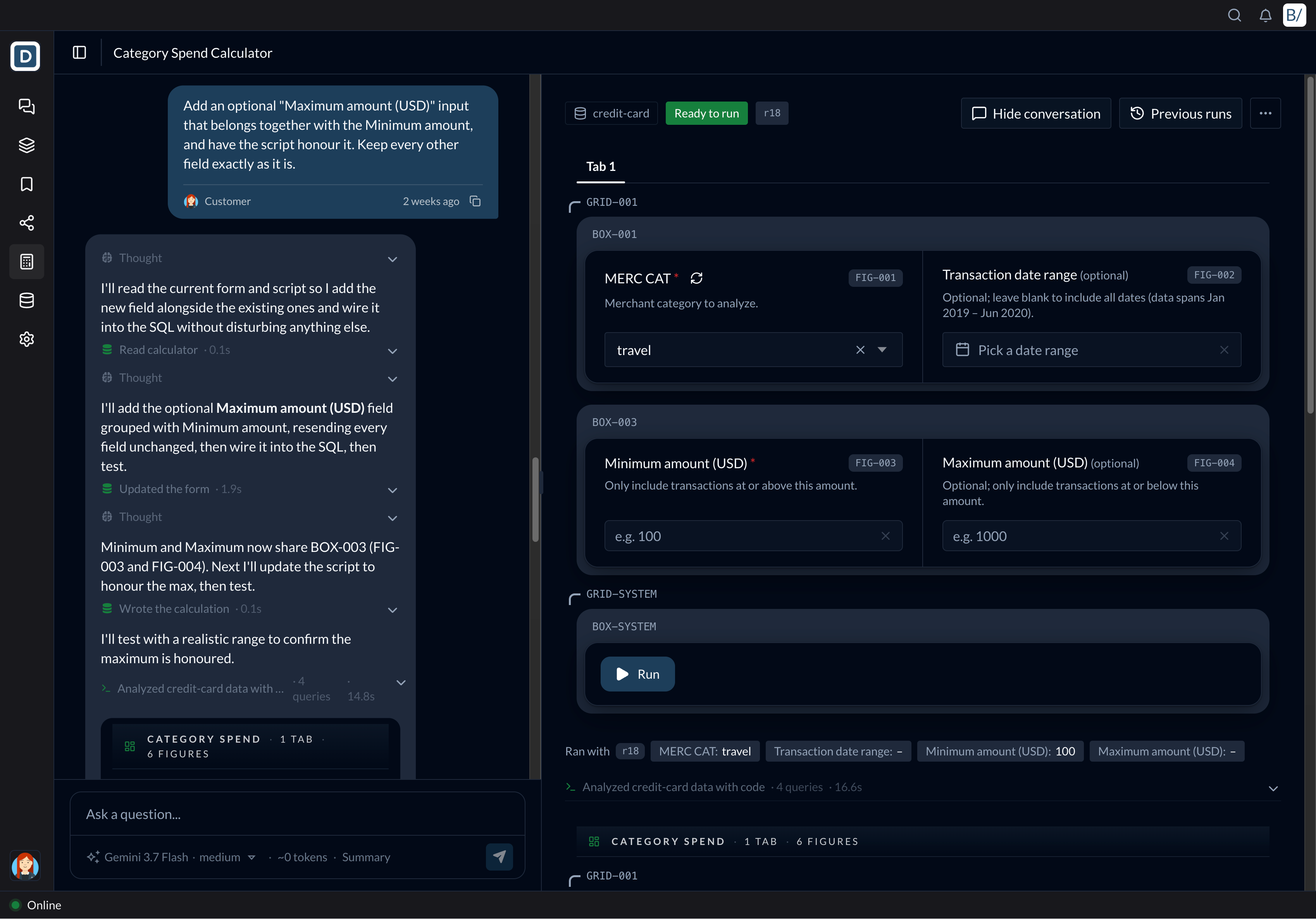
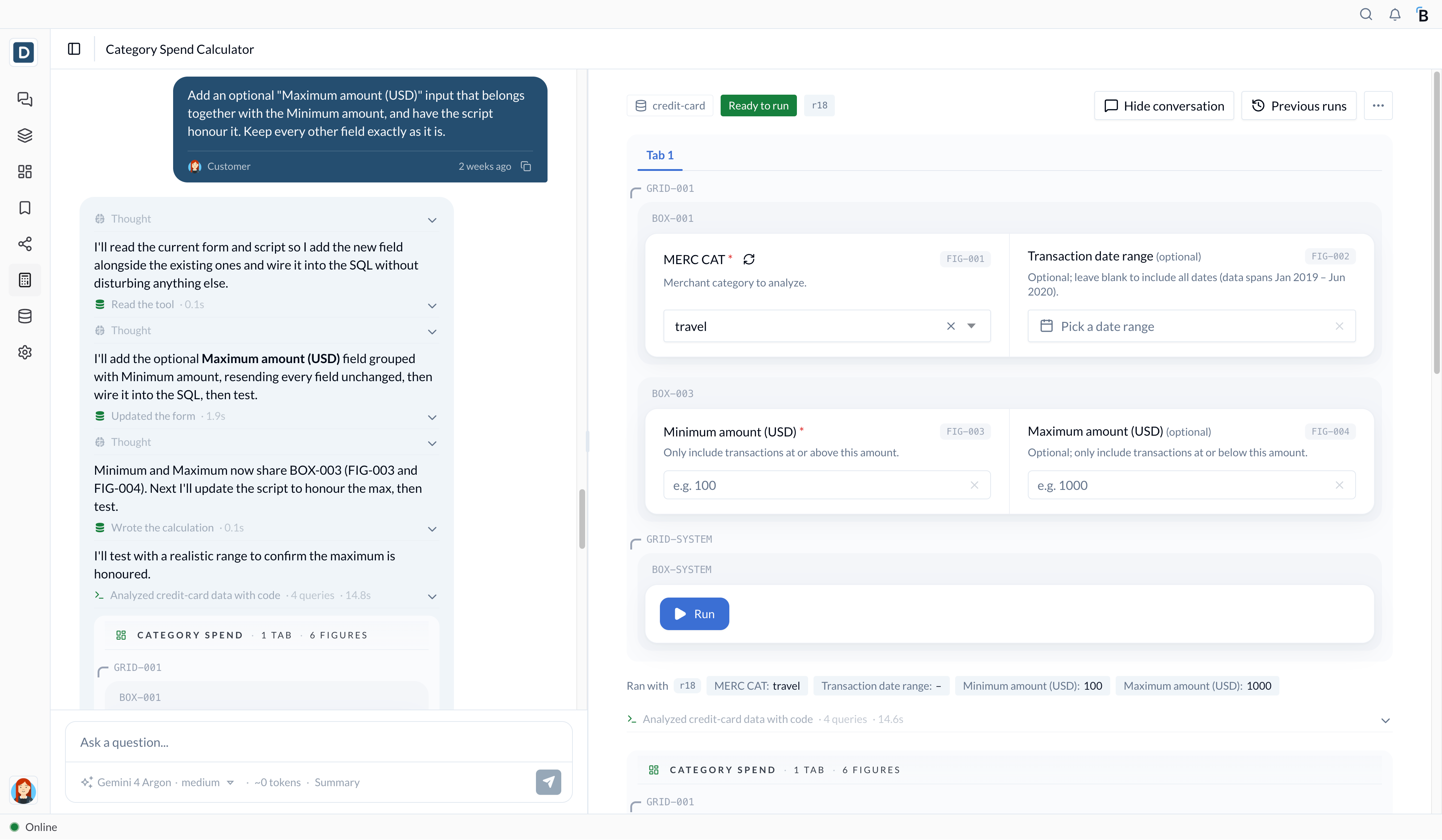
On Beye a tool is shared. It has inputs and a Run button, and the team runs the same one.
For teams building with AI
Your people are already building with AI: a script here, a calculator there, a spreadsheet that now runs month-end. Beye gives that work one place to live, on your company’s data, where the whole team can run it and see what changed.
Somewhere, a laptop is quietly running month-end. 😬
001 / The worry
Nobody wants to stop people building. The worry is what happens after the afternoon a tool was built in.
On Beye a tool is shared. It has inputs and a Run button, and the team runs the same one.
The data fabric connects your source systems and keeps the data current, so every tool starts from the same data.
Python runs in sandboxes inside Beye, not on a laptop or a forgotten server.
Every change is a revision, with its author and a code diff you can read.
Each run is saved with its inputs, the revision it used, its timing and its results.
Beye is SOC 2 Type II audited. The details are in our Trust Center.
002 / The history
A replay of real revisions and runs from the Beye application: who changed a tool, what changed in the code, and what each run returned.
by the assistant
by the assistant
if min_amount is not None:min_val = max_val = Noneif min_amount is not None and str(min_amount).strip():Grouped with Minimum amount · by the assistant
003 / How it works
You do not have to move everything. Start with the one that worries you most.
01
The data fabric brings in data from the systems you already run and keeps it current with recurring updates. No warehouse project first.
02
Describe what you need in plain language. Beye writes real Python and runs it in a sandbox, so you get results you can check, not just code.
03
Give it inputs and a Run button. Colleagues run the same tool with their own inputs instead of copying a file.
04
Revisions show who changed what. Saved runs keep their inputs, timing and results for reviews and audits.
004 / Trust
Sandboxed Python, revisions and runs you can inspect, and audited controls.
Audited controls, detailed in our Trust Center.
Inspect revisions, code changes, inputs and previous runs.
Put your brand on it for customers and partners.
005 / Questions
No. Developers building software should keep the tools they like. Beye is for the business tools that grow up around your data: the calculations, checks and reports people build for themselves. It gives those a shared home, with the data, the execution and the history included.
Start with one. Bring a spreadsheet, script or report you run today, and we will show you how Beye connects the data behind it and turns it into a tool your team can rerun.
Inside Beye. Python runs in sandboxes on the platform, on the data the fabric keeps current, so a tool does not depend on one person’s machine being switched on.
Each tool keeps its revisions, with the author and the code diff, and its previous runs with their inputs and results. Your team can trace a number back to the run and the revision that produced it.
No. Beye supplies its own data fabric and keeps source data current, so you can build without finishing a warehouse project first. If you already have a warehouse, it can be a source too.
Mostly in who operates everything around the tool once it ships. We compare the two approaches job by job, with a public source beside each claim, in the comparison under Further reading.
006 / Further reading
Who keeps it running after launch: the jobs, the owners and the wait, with a source beside each claim.
How planners and analysts build their own reusable tools, with the guardrails IT asks for.
How Beye connects the systems you already run and keeps their data current.
007 / Your next step
Tell us which tool, script or spreadsheet you would start with. A real person on our team reads every note and will reach out to show you how it would run on Beye.
Our engineers love a challenge. Allegedly. 😉
Prefer to talk first? Book a demo.